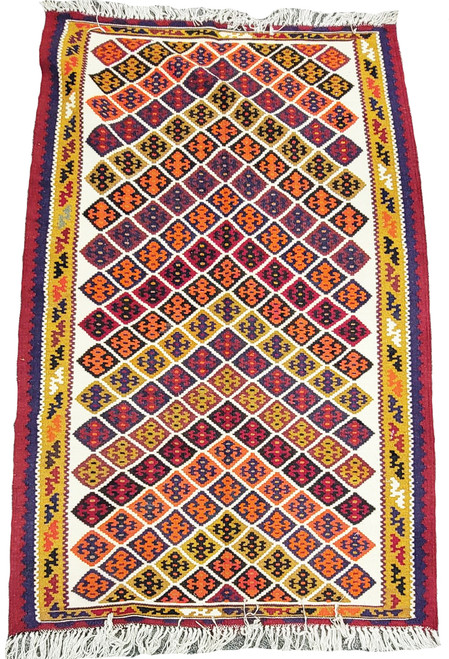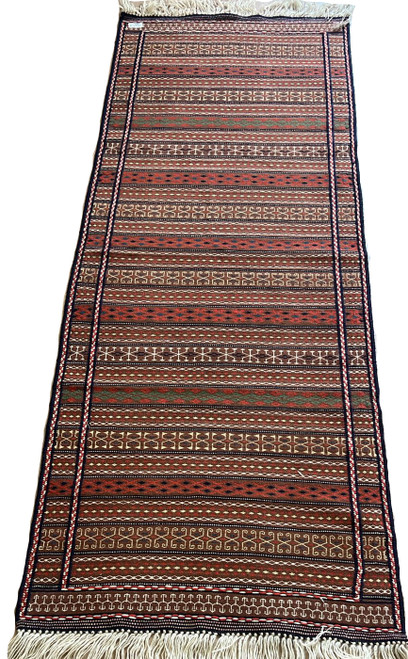


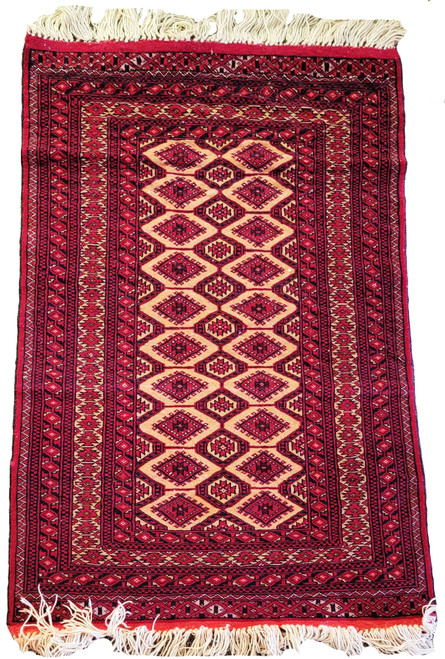
Antique Baluch Tribal Lattice Mat with Kilim End-Skirts rug from the late 19th or early 20th century.
Antique Baluch rugs with a diamond lattice design are highly specialized tribal artifacts, often prized for their moody aesthetics and nomadic authenticity. Historically, these rugs were hand-knotted by nomadic and semi-nomadic Baluch tribes inhabiting the harsh border regions between northeastern Persia (Khorasan), western Afghanistan, and Pakistan.
Key Baluch Identifying Characteristics
- The Moody, Dark Palette: This rug showcases the iconic, low-contrast "night palette" for which Baluch nomadic weavers are celebrated. The background relies on a deep, dark purplish-brown and midnight-indigo base, which causes the cream-colored lines of the diamond lattice to pop out with stark, dramatic graphic contrast.
- The Wide Kilim End-Skirts: Look closely at the top and bottom margins beyond the main geometric field. Those long, extended bands of flat-woven decoration (the red and brown elem or webbing) are a major stylistic signature of Baluch weaving workshops. They traditionally added these flat-weave ends to protect the hand-knotted pile from fraying.
- Intricate Geometric Spandrels: The outer framing border features small, repeating geometric hooks and star-in-box motifs that are common to the nomadic tribes traversing the border regions between Northeast Iran (Khorasan) and Western Afghanistan