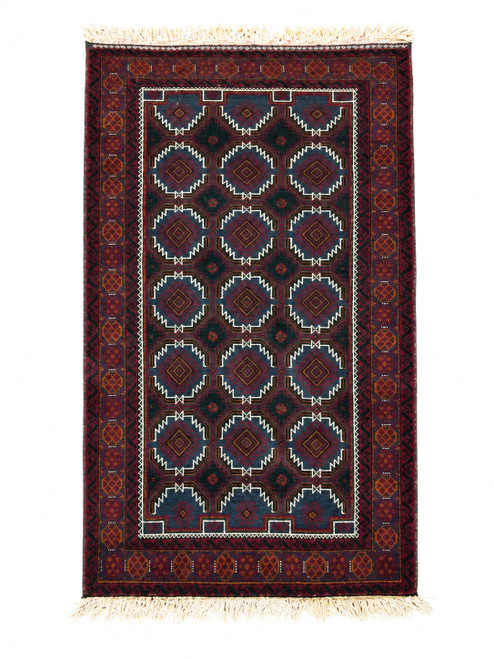


This is an authentic hand-knotted Turkmen Bukhara (Tekke) runner rug, likely woven in Pakistan or Afghanistan using traditional tribal design methods.
Material & Knot Analysis
- Knot Count: Approximately 132 knots per square inch (KPSI), calculated from the back-side macro view showing roughly 11 knots horizontally by 12 knots vertically per inch. This indicates a medium-fine knot density typical of high-quality wool-on-cotton or wool-on-wool tribal pieces.
- Weave Construction: The visible grid, exposed white warp threads, and slight irregularities on the back definitively confirm it is 100% hand-knotted, not machine-made.
- Fringe: The fringe ends feature traditional multi-colored protective yarn accents, which are often used by regional weavers to finish and secure the warp chains.
Design & Motifs
- The "Gül" Pattern: The central field features two parallel columns of octagonal Tekke Güls (often commercially referred to as the "elephant foot" design). Each medallion contains geometric quarters with stylized clover or flower-like structures.
- Color Palette: A vibrant, classic high-saturation scarlet red base paired with deep indigo blue/black geometric linework.
- Borders: The primary border consists of a repeating diamond-mesh matrix flanked by thin geometric guard bands, mirroring classic 19th-century West Asian tribal layouts.
Design & Motifs
- The "Gül" Pattern: The central field features two parallel columns of octagonal Tekke Güls (often commercially referred to as the "elephant foot" design). Each medallion contains geometric quarters with stylized clover or flower-like structures.
- Color Palette: A vibrant, classic high-saturation scarlet red base paired with deep indigo blue/black geometric linework.
- Borders: The primary border consists of a repeating diamond-mesh matrix flanked by thin geometric guard bands, mirroring classic 19th-century West Asian tribal layouts